No Studio, No Problem: How Independent Creators Rewrote the Rules of the Entertainment Industry
Not long ago, breaking into entertainment meant navigating a very specific gauntlet: find a manager, get an agent, pitch to a network, survive development hell, and — if everything went right — maybe get your project greenlit three years after you first had the idea. The gatekeepers were real, the barriers were high, and the casualties were everywhere.
That system still exists. It just doesn't have a monopoly anymore.
The Infrastructure Shift That Changed Everything
The independent creator economy didn't emerge from nowhere. It was built on a stack of technological and cultural changes that, in retrospect, look almost inevitable.
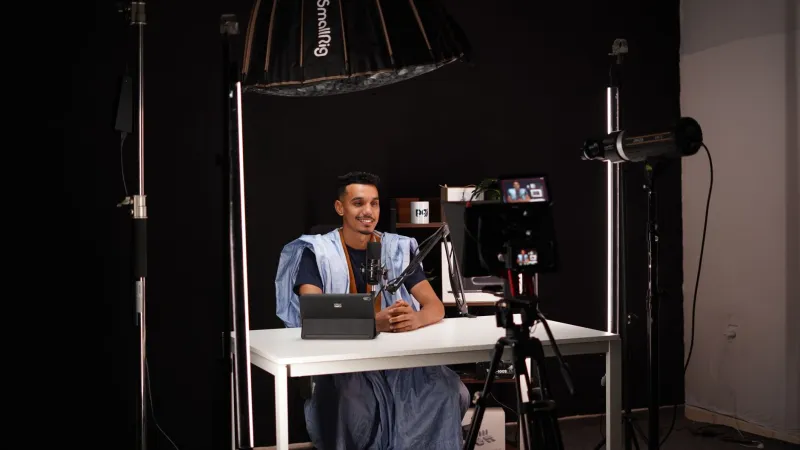
Broadband internet made video distribution cheap. Smartphone cameras made production quality accessible. YouTube created a monetizable publishing platform that required no prior credentials. Spotify and Apple Podcasts opened a global audio distribution network to anyone with a microphone. And then social media gave independent creators something legacy studios had to spend millions to manufacture: a direct line to an audience.
Once those pieces were in place, the traditional entertainment model — which depended on controlling distribution — started losing its structural advantage. The question stopped being "how do I get access to the platform?" and became "how do I build an audience?"
Those are very different problems, and a lot of independent creators turned out to be exceptionally good at solving the second one.
The YouTube Generation That Became an Industry
Let's talk numbers, because they're staggering. MrBeast — Jimmy Donaldson, a kid from Greenville, North Carolina — built a YouTube channel into a media operation that includes a burger chain, a chocolate brand, a philanthropic arm, and production budgets that rival mid-tier Hollywood films. His channel has over 300 million subscribers. He turned down a reported $1 billion acquisition offer.
That's not a fluke. It's a proof of concept.
The YouTube creator economy has matured into something the platform's founders probably didn't fully anticipate. Creators like MKBHD (Marques Brownlee) operate what are effectively technology media companies. Channels like Smarter Every Day or Kurzgesagt produce science content with production values and intellectual depth that rival anything on cable. Emma Chamberlain went from teenage vlogger to a legitimate fashion and media brand presence that legacy magazines would kill for.
What these creators share isn't just talent. It's a fundamentally different relationship with their audience — one built on consistency, authenticity, and the kind of parasocial intimacy that traditional celebrity management actively discourages.
Podcasting: The Quiet Billion-Dollar Disruption
If YouTube disrupted video, podcasting quietly dismantled talk radio, long-form journalism, and celebrity interview culture simultaneously.
The numbers here are also hard to argue with. Spotify acquired The Joe Rogan Experience for a reported $200 million. My Favorite Murder turned true crime comedy into a touring live show empire. Conan O'Brien Needs a Friend proved that a former late-night host could build a bigger, more loyal audience independently than he ever had on network television.
But the more interesting story isn't the celebrity podcasters — it's the niche operators. Shows like Maintenance Phase, Decoder Ring, and You're Wrong About built substantial, fiercely loyal audiences by going deep on subjects that mainstream media would never dedicate resources to. They monetized through Patreon, Substack, live events, and merchandise, creating sustainable businesses that don't depend on advertiser approval or network renewal cycles.
That independence is the whole point. When you own your distribution and your audience relationship, you don't need permission to keep going.
Streaming-First Independents: The New Studio Model
Beyond YouTube and podcasting, a new category of independent entertainment company has emerged: the streaming-first production house that operates without a traditional studio parent.
A24, while not a streaming platform itself, pioneered the model of a lean, taste-driven production company that could compete aesthetically with major studios while maintaining creative independence. Their output — Everything Everywhere All at Once, Midsommar, The Whale, Beef — consistently punches above its budget weight because the company's identity is built around creative risk rather than franchise extension.
On the creator side, companies like Rooster Teeth (before its troubled closure), Corridor Digital, and Smosh built genuine entertainment businesses on YouTube and their own platforms, producing scripted content, animation, and live events that rivaled traditional studio output in ambition if not always in budget.
The newer model goes further. Creators like Rhett & Link (Good Mythical Morning) have built Mythical Entertainment, a multi-platform media company with a full production staff, original programming, a podcast network, and consumer product lines. They started as two guys making videos in a backyard. They now run a company.
The Business Models That Actually Work
Not every independent creator builds a billion-dollar empire, obviously. But the ones who build sustainable businesses tend to share a few structural characteristics.
Diversified revenue is the first one. The creators who survive algorithm changes, platform policy shifts, and sponsorship market downturns are the ones who aren't dependent on any single income stream. Ad revenue plus Patreon plus merchandise plus live events plus licensing equals resilience.
Community ownership is the second. Creators who invest in direct audience relationships — email lists, Discord communities, Patreon tiers — have a buffer against platform volatility. If YouTube changes its monetization rules tomorrow, a creator with 200,000 Patreon subscribers doesn't panic.
Niche depth over broad appeal is the third, and it's counterintuitive. The most durable independent media businesses tend to go extremely deep on a specific subject or voice rather than trying to appeal to everyone. The audience is smaller, but the loyalty is exponentially higher.
What This Means for Traditional Entertainment
Legacy studios and networks aren't blind to this. The talent acquisition strategies of the last five years — Netflix signing deals with Ryan Murphy and Shonda Rhimes, Spotify's podcast acquisitions, YouTube's investment in its creator ecosystem — are all responses to the same recognition: the people who can build and hold audiences are the real asset, and they don't need the infrastructure they used to.
The tension this creates is genuinely interesting. Traditional entertainment still offers budgets, distribution scale, and infrastructure that most independent creators can't replicate. But it comes with creative compromise, slower timelines, and a fundamental loss of the audience ownership that makes independent businesses so resilient.
The smartest creators are navigating this tension deliberately — taking studio deals for specific projects while maintaining independent channels, using platform partnerships to expand reach without surrendering the direct audience relationship.
The Landscape in 2024 and Beyond
New platforms keep entering the space and changing the math. Substack has become a legitimate home for independent video and audio alongside writing. Nebula — a streaming platform built by and for educational content creators — offers an alternative to YouTube's advertiser-dependent model. Patreon's continued growth has normalized the idea of audiences directly funding creators they value.
At KyngDVB, we're watching this space with the same energy we bring to everything: bold, curious, and convinced that the most interesting entertainment is often coming from exactly where the establishment isn't looking.
The independent creator economy isn't a disruption anymore. It's the industry. The rest is just catching up.