Scroll to Screen: How Going Viral Is Now the Fastest Path to a Hollywood Deal
Not that long ago, breaking into Hollywood meant headshots, auditions, pilot season, and years of grinding through a system built on gatekeepers — agents, casting directors, studio executives — each one a checkpoint you had to pass before the next door would open. Talent mattered, sure, but access mattered just as much, and access was carefully controlled.
Then short-form video happened, and the whole architecture started to shake.
Today, the fastest route from unknown to signed isn't a conservatory program or a well-connected manager. It's a 60-second clip that catches fire on TikTok, Instagram Reels, or YouTube Shorts — something raw and specific and real enough to make millions of people stop scrolling for just a moment. That moment, multiplied across enough screens, is now worth serious money. And Hollywood has noticed.
The New Audition Tape
Short-form video platforms have quietly become the most efficient talent discovery mechanism the entertainment industry has ever seen. Where traditional scouting relied on geography, industry connections, and sheer luck, social platforms surface compelling personalities at massive scale — and let audiences do the vetting before any executive has to take a meeting.
A creator who builds 2 million followers on TikTok through cooking commentary, or sketch comedy, or brutally honest movie reviews hasn't just built an audience. They've demonstrated something that used to take years to prove in a professional context: that people want to watch them. That they have presence. That they understand how to connect.
For streaming platforms and production companies that are constantly hunting for the next bankable name, that kind of pre-validated appeal is enormously attractive. The risk calculation changes entirely when a creator arrives at the negotiating table with a built-in fanbase already primed to follow them wherever they go.
From FYP to First-Look Deal
The pipeline from viral content to professional contract has become almost formalized at this point. Talent agencies have entire divisions dedicated to signing social media creators. Streaming platforms have development teams whose explicit job is to scroll through TikTok looking for the next thing. Production companies are running creator accelerator programs specifically designed to translate short-form energy into long-form content.
The deals being made aren't small. Multi-year first-look agreements, podcast production contracts, docuseries partnerships, and full scripted development deals are all flowing toward creators who, in some cases, had never set foot on a professional set before their first big viral moment.
The financial figures involved have become genuinely staggering. While individual deal terms are often confidential, industry reporting has documented eight-figure overall deals for top creators crossing over into traditional media — numbers that would have seemed absurd for someone without a single film or TV credit just a decade ago.
What's changed is the definition of a credit. A video with 50 million views is a credit now. A YouTube channel with a decade of consistent content is a credit. The industry has had to expand its understanding of what "proven" actually means.
Case Studies in the Crossover
The clearest examples of this shift are creators who've made the jump from social platforms to major productions in ways that have genuinely resonated with audiences — not just as novelty casting, but as legitimate entertainment.
Creators who built audiences through character-driven comedy sketches have landed scripted series development deals with streamers. Food and lifestyle personalities with massive Instagram followings have been handed documentary series and competition show hosting gigs. Gaming and commentary creators have moved into narrative podcasting and eventually into on-screen roles.
What these transitions share is a common thread: the creator's social platform wasn't just a promotional tool — it was a proof of concept. The format, the voice, the specific way they engaged with their audience — all of that informed what the studio or streamer thought they could build around that person at larger scale.
The transitions that haven't worked tend to share a different common thread: the studio tried to sand off exactly what made the creator interesting in the first place, packaging them into something more conventional in hopes of reaching a broader audience. It's a tension that comes up constantly in conversations about creator crossovers — the pull between what made someone viral and what the industry thinks is safe.
What This Means for Traditional Hollywood
The gatekeepers haven't disappeared, but their grip has loosened in ways that are impossible to ignore. Agents still matter. Relationships still matter. The ability to navigate a production set, manage a writers' room, or deliver a performance under pressure — those skills don't come automatically from having a big following.
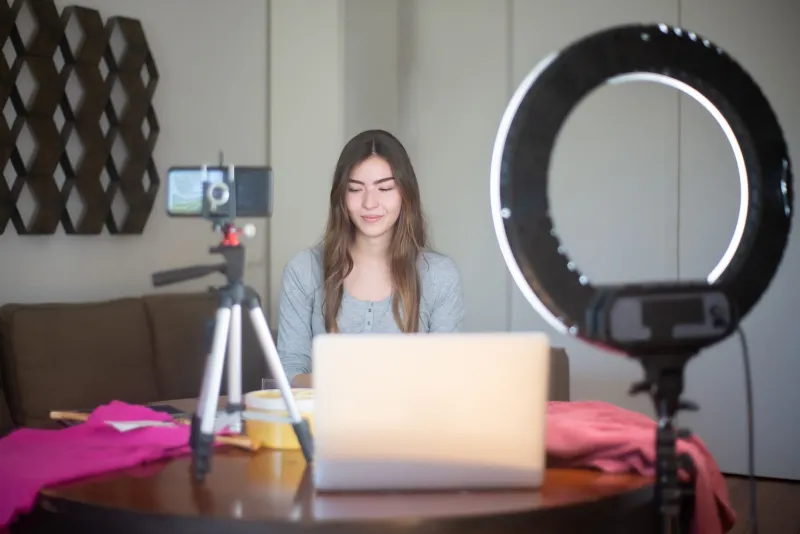
But the first door — the one that used to require years of grinding just to get in front of the right person — is now potentially openable from your bedroom with a ring light and a good idea. That's a real shift, and it's created real anxiety among the people whose careers were built on controlling that door.
Acting coaches, traditional talent managers, and mid-tier agencies that haven't adapted to the social media talent landscape are finding themselves increasingly cut out of deals that happen at the speed of the internet. The timeline from "viral moment" to "signed contract" can now be measured in weeks rather than years, and the traditional industry infrastructure wasn't built to move that fast.
What Aspiring Creators Actually Need to Know
For anyone watching this shift and wondering how to position themselves, the honest answer is more nuanced than "just go viral."
The creators who successfully make the leap to major deals tend to have a few things in common beyond a high follower count. They have a specific, identifiable point of view. They've demonstrated consistency — not just one hit clip, but a sustained body of work that shows they can produce. And they've built genuine community, not just passive viewership.
A million followers who show up for one video and never return are worth far less than 200,000 followers who comment, share, and show up every time. Engagement depth matters to the platforms evaluating talent, because it's a better predictor of whether an audience will follow a creator across formats.
The other thing worth understanding is that the crossover, when it happens, isn't the finish line — it's the beginning of a different and more demanding game. The production infrastructure of Hollywood is genuinely complex, and creators who thrive in it are the ones who approach it as a new skill set to learn rather than a validation of what they already know.
The Bigger Picture
What's really happening here is a renegotiation of what entertainment authority looks like. For most of Hollywood's history, the industry decided who was worth watching. Now, audiences are making that call first — and the industry is following their lead.
That's not a perfect system. Virality favors the attention-grabbing over the substantive, and not every creator with a massive following has the depth to sustain a feature film or a prestige series. There will be deals that don't pan out and crossovers that miss.
But there will also be voices and perspectives that would never have made it through the traditional system getting their shot at the big screen — or at least the big stream. And for an industry that has historically struggled with who gets to tell stories, that part of the shift is genuinely worth celebrating.
The scroll isn't just entertainment anymore. For a growing number of people, it's a career launch pad. And Hollywood is watching every frame.